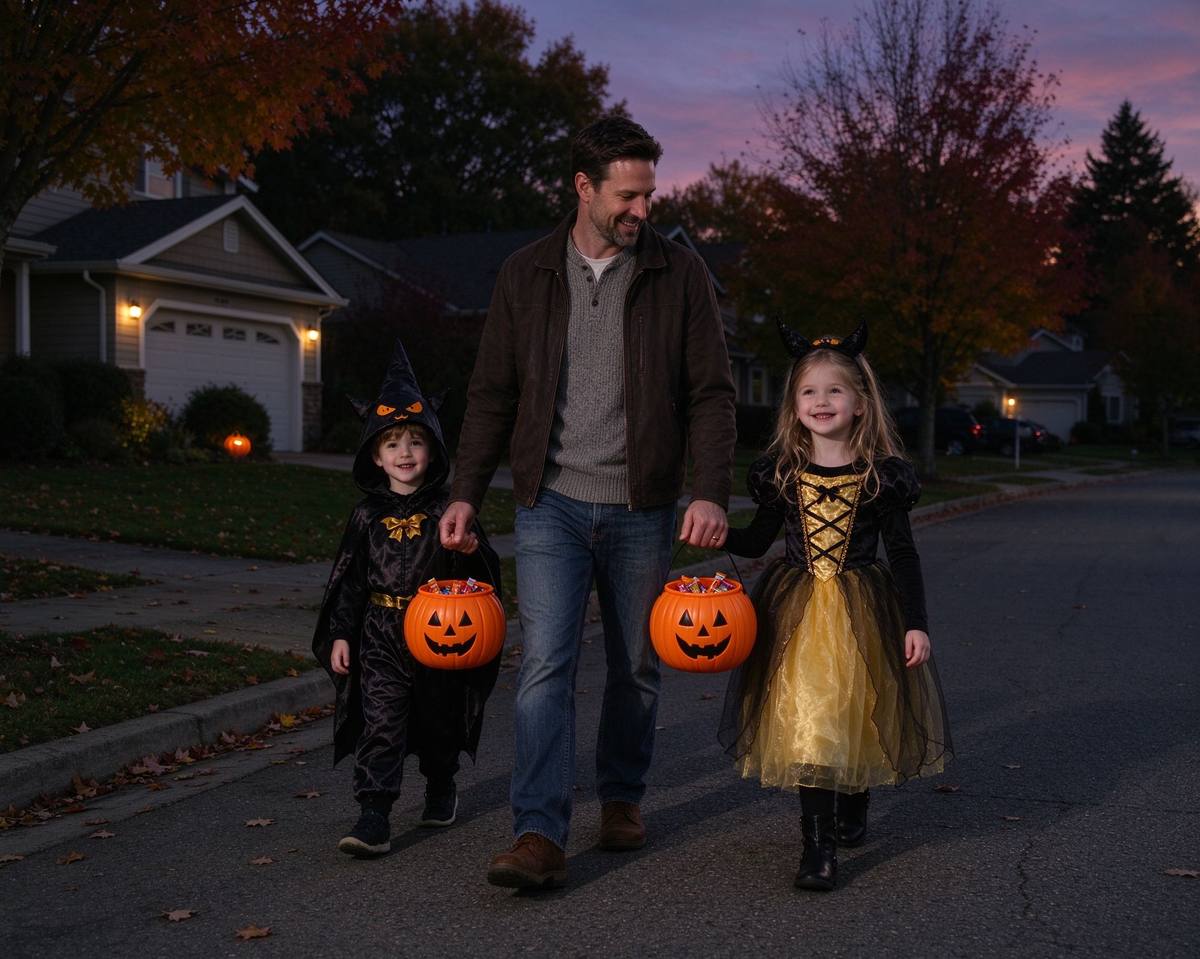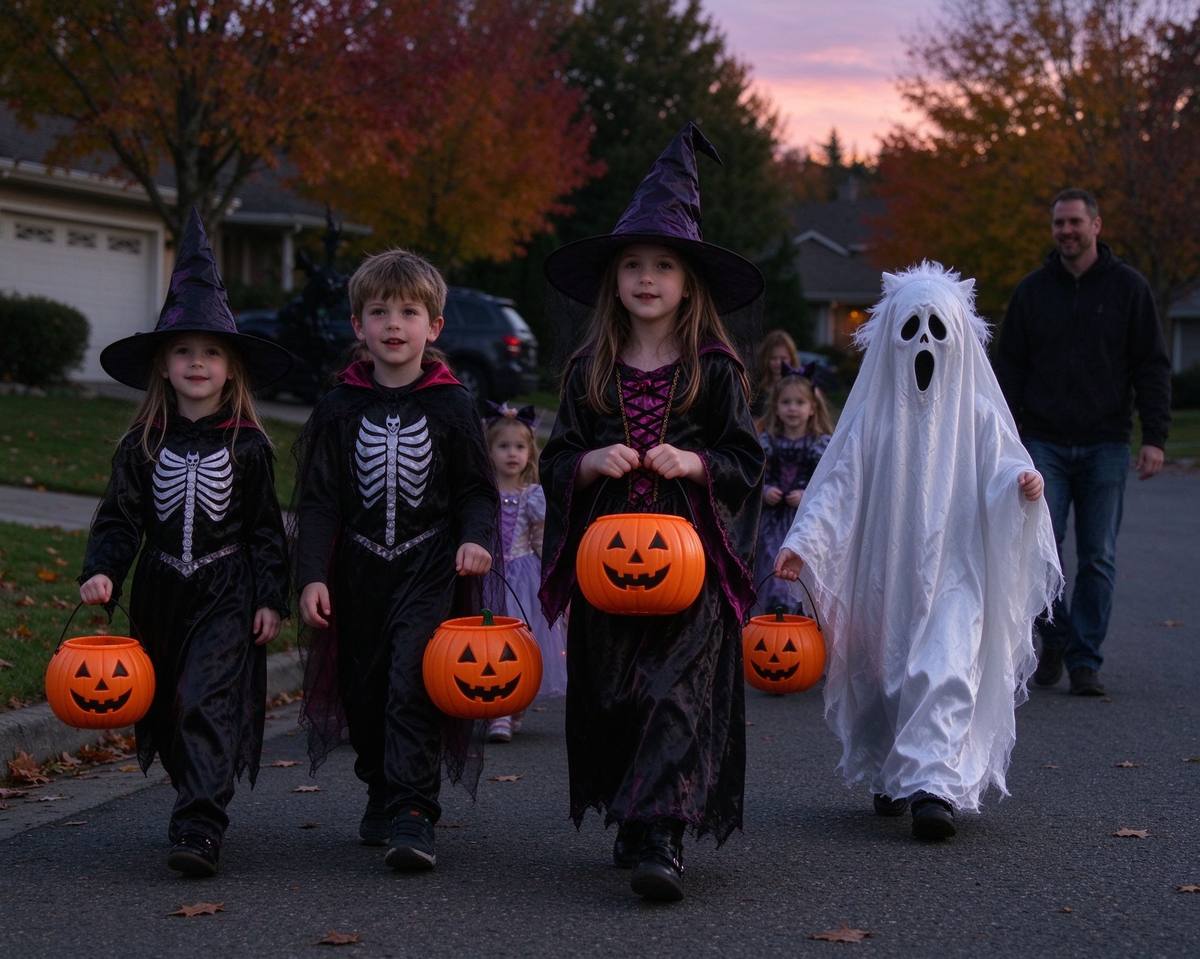
Every parent group chats the same questions the week of October 31: What time do we go out? How do we handle the neighbor who still gives peanuts? What do we do if a kid gets separated? The panic stories are real — lost children in unfamiliar suburbs, allergy reactions to unlabeled treats, and drivers who never see a black-cat costume crossing the street at 7 p.m. This guide turns those worries into a concrete, checkable plan: route, visibility, candy rules, allergy safety, and a homecoming inspection routine. It is the trick or treat safety checklist most families wish they had started earlier.
Before you leave: the pre-walk checklist
Do these 48 hours before, not at the door. Each item takes under three minutes:
- ID on the kid. Write your phone number on a wristband or a luggage tag tucked into the costume. Phone numbers on sticky labels fall off within the first two houses.
- Clear masks, longer hems. Masks with poor eye holes get pushed onto the forehead within minutes anyway — swap for face paint. Costumes dragging on the ground are tripping hazards; hem them or size up.
- Reflectivity plan. Add reflective tape to the costume's back and candy bucket, or carry a small LED flashlight. Dark wizard robes and black cat suits are nearly invisible to drivers between 6 and 8 p.m.
- Agreed meeting point. Pick a lit landmark at the start — a specific porch light, the corner mailbox, your own door — and rehearse it with kids under 10. If separated: stand still, ask another parent with kids for help.
- Food rules. Decide the deal now: no candy until home and inspected. Kids who know the rule ahead of time do not argue at the seventh house.
To make this repeatable every year, build and print your own version in the Trick-or-Treat Checklist builder — tick items as you pack, then print the final list before you walk out.
Route planning: the 7 p.m. window matters
Most police departments recommend trick-or-treating between 5:30 and 8:30 p.m., with the densest safe window from 6:30 to 8:00. Plan the route around that window rather than wandering:
- Stay within your own neighborhood or one adjacent. Familiar curbs, driveways and crosswalks beat a "richer candy" district you do not know.
- Avoid busy arterials. Streets with speed limits over 35 mph or no sidewalks are out of the route entirely, no exceptions.
- Mark the lit houses. Dark houses are usually not participating — skip them. A porch light on is the universal "we have candy" signal.
- Time-box it. Under-7 kids last 45–60 minutes; 8–12 year olds can go 90 minutes. Build in a return-by time and tell the kids the bag is full when you say it is.
For the math: input how many blocks you plan to hit, minutes per stop, and a start time in the Trick-or-Treat Route planner — it gives you a realistic total duration plus etiquette reminders like always using crosswalks and saying thank you.
Allergy-safe candy: the teal pumpkin system
Food allergy is the most overlooked trick-or-treat risk: peanuts, tree nuts, milk and sesame hide in candies that look identical from the outside. The established system in North America is the Teal Pumpkin Project — houses that put out a teal pumpkin offer non-food treats (stickers, mini toys, glow sticks) so allergic kids have something safe to collect.
| Situation | What to do |
|---|---|
| Your child has a nut allergy | Inspect every treat at home. Toss anything unlabeled, homemade or with "may contain" warnings. Carry their epinephrine pen on the walk — not in the car. |
| You hand out candy | Buy a teal pumpkin or teal bucket (under $5) and add non-food treats. Many kids will pick the glow stick over the chocolate. |
| Neighbors ask what to avoid | Tell them: fun-size peanut butter cups, nougat bars, chocolate-covered nuts, and unlabeled bulk candy are the big four. |
| At home sorting | Sort by labeled vs unlabeled. Let your kid trade unlabeled treats for their favorite safe ones from your backup stash. |
Rule of thumb: homemade or unwrapped treats from anyone are discarded, every year, no exceptions — even from family friends. It is not rudeness; it is the standard safety practice.
Homecoming inspection: the 15-minute sort
The night is not over when the bag comes home. Do this while the kids are hyped on one small safe treat:
- Check wrappers for tampering, tears or unusual pinholes.
- Remove any choking-hazard items for kids under 4: gum, hard whole nuts, mini toy parts.
- Spot the allergy triggers per your household rules.
- Decide the candy-eating schedule for the week — "two pieces after dinner" prevents the 2 a.m. sugar crash meltdown.
Frequently asked questions
What age can kids trick-or-treat alone?
Most safety guidance puts the threshold around 12–13, in a familiar neighborhood, in a group, and with a phone. Under that, a parent or trusted older teen should walk with the group, even if they hang back.
What time is too late to trick or treat?
Most streets wind down by 9 p.m. Ringing a doorbell after 9 p.m. — especially outside the 5:30–8:30 p.m. norm — is where polite complaints come from. Plan a hard end time of 8:30.
How do I avoid giving out unsafe candy?
Stick to wrapped, labeled national brands; offer a teal-bucket non-food option; and skip homemade items. Buy the candy after Halloween sales start in October and you will have budget left for the teal pumpkin.
中文要点摘要(Chinese key points)
出发前48小时准备:手环写家长手机号、面具换脸彩/拖地下摆改短、服装背面和提桶贴反光条或带小手电、约好走散集合点、约定"回家检查后才能吃"。
时间与路线:建议17:30-20:30出门、18:30-20:00最密集;只走自家或相邻街区、避开限速35以上无人行道的主干道、只敲亮门灯的人家;7岁内走45-60分钟,8-12岁走90分钟。
过敏安全(Teal Pumpkin 蓝南瓜计划):过敏娃随身带肾上腺素笔、回家逐包检查、丢弃无包装/自制/"may contain"食品;自家发糖可放蓝南瓜+发贴纸/荧光棒等非食物。高危四样:花生酱杯、牛轧糖、坚果夹心巧克力、散装无标糖。
回家15分钟分拣:查包装破损、4岁以下剔除 choking 物、按过敏规则挑出、定"饭后两颗"的一周吃糖节奏。
Go out prepared, come back relaxed
A calm Halloween is a planned Halloween: print your list with the Checklist builder, time the route with the Route planner, and check our guides to keeping the family pet calm while the doorbell rings 40 times, plus carving the pumpkin that greets your visitors. See you on the porch.