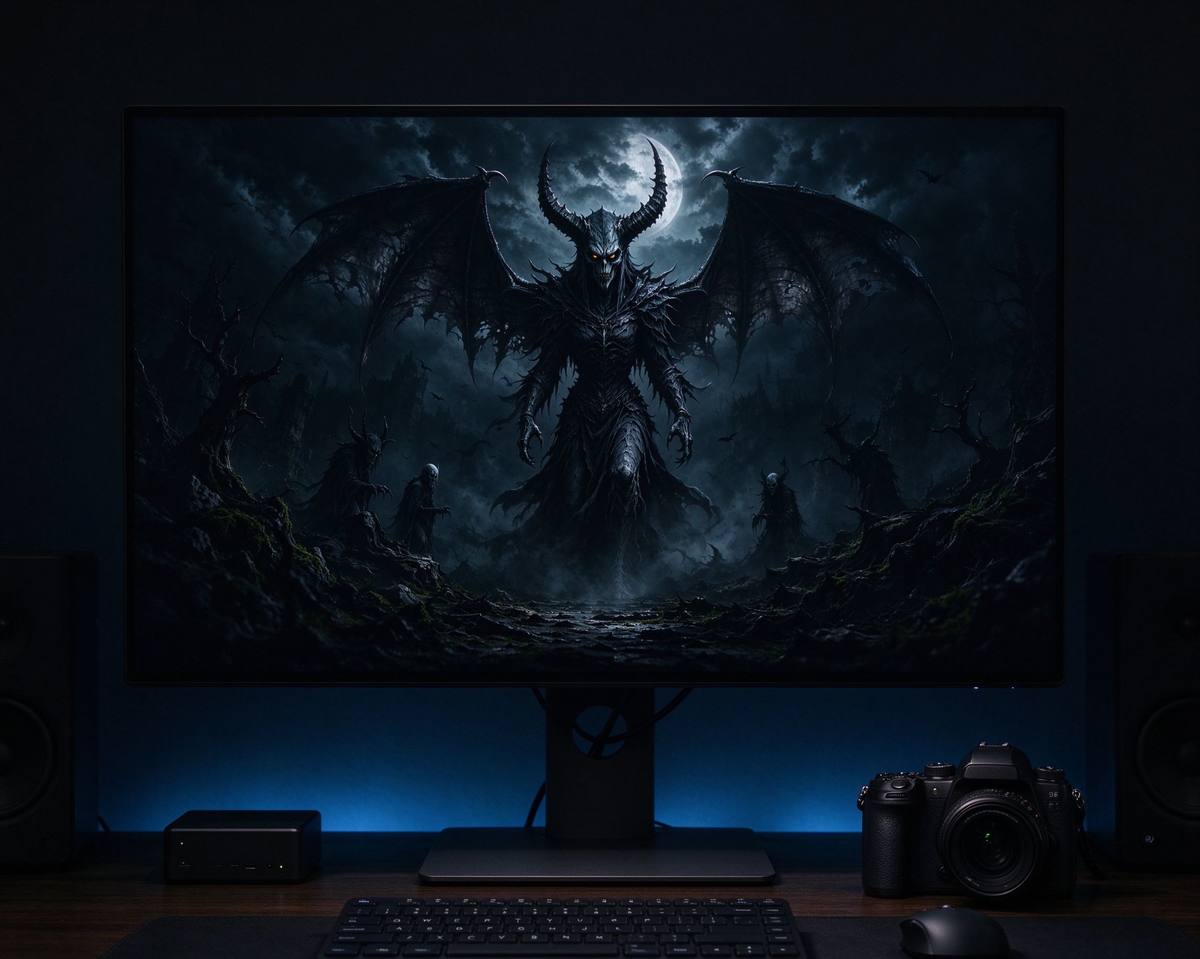
Type "spooky halloween" into Midjourney or DALL-E and you get ten thousand generic stock witches. Type a structured prompt, and you get art that looks like it belongs on a poster. The gap is not the model — it is how you talk to it. This guide breaks down the exact anatomy of a great halloween AI prompt, gives you the vocabulary words that actually move the needle on light and atmosphere, and hands you 10 complete example prompts with a "why it works" note after each. By the end you can write a Midjourney halloween prompt in under a minute, or a DALL-E halloween prompt that behaves differently on purpose.
The anatomy of a great Halloween prompt
A strong prompt is not a longer sentence — it is the right six slots filled. Use this order every time:
- Subject. Who or what is in the frame? Be specific: "an old witch" is weak; "an old witch with silver hair and a crooked broom" is strong.
- Style. Oil painting, pixel art, watercolor, 3D render, storybook illustration, film still, woodcut. The style is 50% of the final look.
- Mood. Menacing, playful, dreamlike, eerie, whimsical, gothic. Mood words steer the colour and expression.
- Lighting. Moonlight, candlelight, jack-o'-lantern glow, lightning, fog. Lighting is what makes Halloween read instantly.
- Medium / technical hints. "Digital art", "cinematic", "wide shot", "close-up", "8k", grain, depth of field.
- Negative words (optional but powerful). "no text, no watermark, no extra fingers" — tells the model what to avoid.
The single biggest upgrade you can make is adding one specific light source. "A haunted house" is noise; "a haunted house lit only by jack-o'-lanterns on the porch" is a picture.
10 ready-to-use halloween prompts, with breakdowns
1. Witch over a pumpkin field
An old witch flying on a crooked broom over a misty pumpkin field, full moon behind her, storybook watercolor illustration, muted purple and orange palette, cinematic wide shot, --ar 3:2
Why it works: two named light sources (moon, mist) anchor the night; "storybook watercolor" sets a friendly tone instead of a horror one; the palette sentence keeps colours from drifting neon.
2. The haunted mansion
Victorian mansion on a hill, one window glowing warm orange, bare dead trees, fog on the lawn, gothic oil painting, dramatic moonlight, dark moody atmosphere, --ar 16:9
Why it works: a single glowing window is a classic "someone is home" focal point; "gothic oil painting" gives rich shadows; the 16:9 ratio makes it a natural desktop wallpaper.
3. Skeleton barista (whimsical)
A friendly skeleton barista pouring coffee in a cozy cafe, warm candlelight, whimsical 3D render, soft rounded shapes, Halloween decorations, bright and charming, --ar 1:1
Why it works: "friendly" and "whimsical" stop the skeleton from becoming scary; "cozy cafe" is a surprising setting that makes the image shareable; 1:1 is perfect for social avatars.
4. Ghost child at the window
A translucent little ghost pressing its hand against a rainy window at midnight, blue moonlight, pixel art, 16-bit retro game style, melancholic, --ar 9:16
Why it works: "translucent" + "rainy window" is a concrete visual; pixel art is a style keyword the model knows well; 9:16 makes a striking phone wallpaper — combine it with our Wallpaper Maker for the final export.
5. Black cat with glowing eyes
A black cat with glowing green eyes sitting on a wooden fence, glowing jack-o-lanterns lining the path behind, close-up portrait, digital painting, shallow depth of field, spooky but cute, --ar 2:3
Why it works: "close-up portrait" turns a generic cat into an intimate shot; the lantern row gives depth; "spooky but cute" is a two-word mood that is worth a thousand adjectives.
6. Zombie apocalypse city
Zombies walking through a foggy empty city street at dawn, abandoned cars, desaturated gray tones with a single orange traffic light, cinematic film still, horror movie atmosphere, --ar 21:9
Why it works: the "one orange in a gray world" palette trick forces a focal point; "film still" asks for realistic lighting; the ultrawide ratio feels like a movie frame.
7. Vampire at the ball
Elegant vampire count in a black velvet cape dancing alone in an empty grand ballroom, chandeliers casting long shadows, baroque oil painting, rich crimson and gold, mysterious, --ar 3:4
Why it works: "dancing alone" adds a lonely story detail that static character art lacks; "baroque" supplies detail and texture; 3:4 is the standard art-print and poster ratio.
8. Underwater ghost ship
A ghostly wooden ship slowly sinking in dark teal water, shafts of moonlight from above, bioluminescent green plankton, ethereal fantasy digital art, dreamlike and quiet, --ar 16:9
Why it works: an unusual setting (underwater) avoids witch-over-mountains cliche; "bioluminescent green" is a precise light-source word; "quiet" sets a calm, haunting mood rather than a jump-scare one.
9. Pumpkin-carving night market
A small town night market in autumn, hundreds of carved jack-o-lanterns on stalls, warm orange glow, people in cozy sweaters, storybook digital illustration, wholesome festive mood, --ar 3:2
Why it works: this is the "Halloween as joy, not horror" prompt — perfect for family content; "hundreds of lanterns" gives density and texture; warm orange glow sets the colour temperature.
10. Mad scientist lab
A mad scientist laboratory at night, bubbling green potions, cracked mirrors, lightning through the window, neon green and purple, retro 1950s sci-fi movie poster style, campy fun, --ar 2:3
Why it works: "retro 1950s sci-fi poster" is a loaded style keyword that instantly ages the image; "campy fun" signals humour, so the model does not play it straight.
Midjourney vs DALL-E: write differently on purpose
The same subject gets better results when you tune the tool:
- Midjourney loves comma-separated keyword piles and style references (artists, films, eras), plus parameters like
--ar(ratio),--style rawand--no. Use it for painterly, atmospheric, poster-ready art. - DALL-E prefers plain natural-language sentences and understands requests like "in the style of" more literally. It is stronger at arranging text inside an image and at friendly, cartoon-commercial looks. Use it for stickers, cards and cute concepts.
If writing both versions by hand feels like double work, the AI Art Prompt Generator builds a Midjourney-style and a DALL-E-style prompt from the same theme, style, mood and light choices — you then hit "surprise me" until one composition clicks.
Negative words: the safety net
Most AI art fails for predictable reasons, so list the failures you have seen:
- Midjourney: add
--no text, watermark, extra fingers, distorted faceswhen people are in the image. - DALL-E: write it in plain language: "Avoid text, watermarks, and distorted hands."
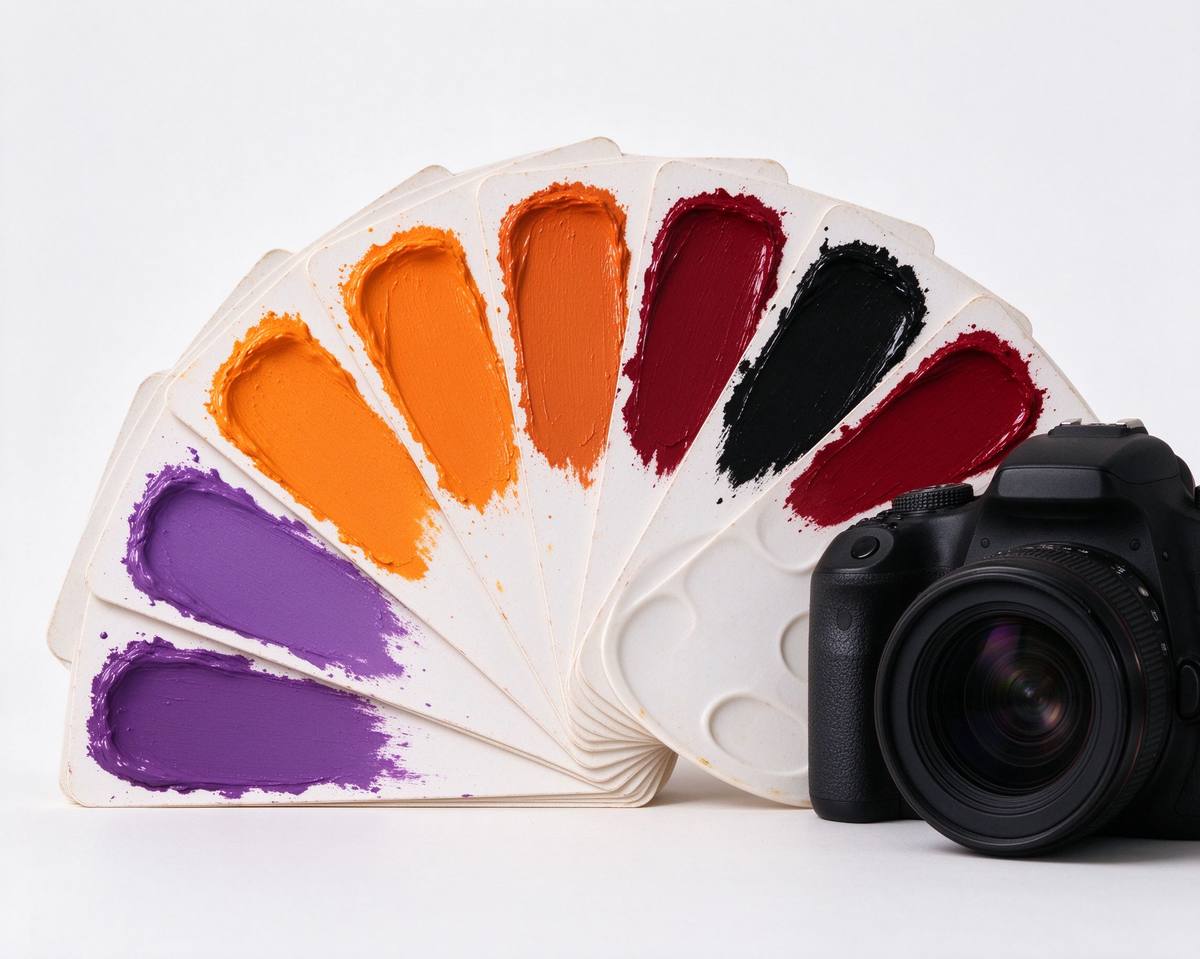
You will also want a matching colour scheme for your final art — generate a harmonious five-colour Halloween palette with the Spooky Palette tool and drop the hex names into your prompt.
Frequently asked questions
How long should a halloween prompt be?
Aim for roughly two short sentences or a comma-separated list of 6–12 keyword chunks. Too short and it is generic; too long and the model loses the main subject.
Why does my DALL-E result look nothing like Midjourney's?
They are trained differently. DALL-E is more literal and cute; Midjourney is more artistic and cinematic. Write for the engine, not against it — shorter keyword piles for Midjourney, natural sentences for DALL-E.
Can I use generated Halloween art commercially?
Check your plan's terms; most consumer tiers grant commercial use on standard outputs. Avoid recognizable characters (Disney witches, movie monsters) in prompts if you plan to sell the result.
中文要点摘要(Chinese key points)
提示词六槽位(按顺序填):①主体(越具体越好)②风格(水彩/油画/像素/3D/海报风)③氛围(诡异/可爱/梦幻/哥特)④光源(月光/烛光/南瓜灯/闪电,这是万圣节的灵魂)⑤媒介与技术词(电影感/特写/宽幅/8k)⑥负面词(no text/watermark/extra fingers)。
最大升级:给画面一个具体光源——"鬼屋"很普通,"门廊只有南瓜灯照亮的鬼屋"才是画。
工具差异:Midjourney吃逗号关键词堆+--ar参数,适合油画感海报;DALL-E吃自然语言句子,适合可爱卡通和带字图。可让 Prompt Generator 一键生成两版。
本文附10个完整示例:女巫飞过南瓜田、维多利亚鬼宅、骷髅咖啡师、窗上小幽灵、栅栏黑猫、僵尸晨雾城市、独舞吸血鬼、水下幽灵船、南瓜夜市、疯狂科学家实验室,每个都附"为什么有效"解析。
Write it, generate it, post it
You now have the skeleton of every good Halloween prompt: subject, style, mood, light, medium, negative words. Start with example 1, change one word (moonlight to candlelight, watercolor to pixel art), and see how much the mood moves. Open the AI Art Prompt Generator if you want the two engines' versions assembled automatically. When you want to put your generated art on your phone, follow our spooky wallpaper guide, and for a wider tour of what AI photo tools can do this year, see the 2026 effects roundup.